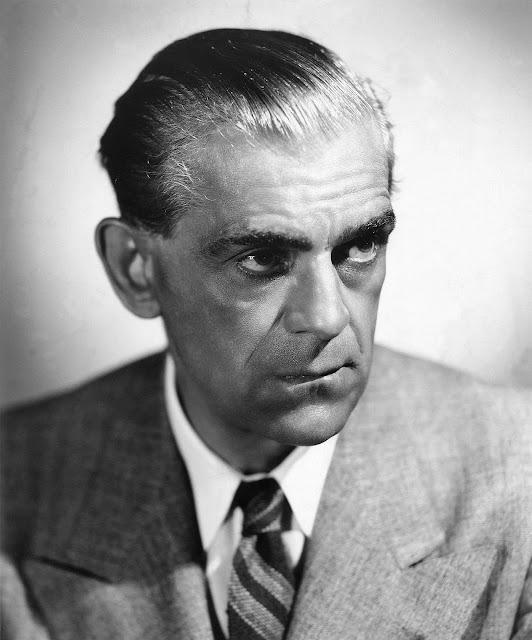
"I think of horror films as art, as films of confrontation."

- David Cronenberg

Actors     Actresses     Flicks     Models     Twilight Zone Guide
Showing posts with label Actors. Show all posts

Actors: Vincent Price

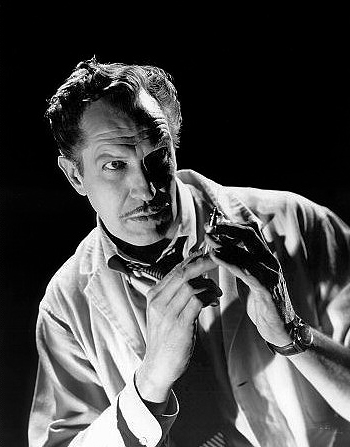
Hollywood horror actor Vincent Price
Vincent Price was born in 1911 in St. Louis to an affluent family with a history of spectacular success if only gained through abysmal failure. Vincent would apply the harsh lessons learned by his family his entire life in an industry that was known for instability, greed and long droughts.

The Price family business, The National Candy Company, was founded by Vincent's father and namesake Vincent Leonard Price in 1902. His grandfather, Dr. Vincent Clarence Price, invented a popular baking soda in Illinois that made him a millionaire in the 1880's. Dr. Price would lose this fortune in the Panic of 1893. The family's re-established fortune, earned by his father, would provide a young and determined Vincent with an education at Yale.

During his first month in school in Connecticut Wall Street crashed. Fortunes that took lifetimes to accumulate were lost in a few weeks. On October 29th 1929 men, including some of Price's classmates, killed themselves because they could not bear the thought of being anything other than filthy rich. In his first autobiography I Like What I Know, written in 1958, he remembers:

"I've always believed that the Great Depression was the best thing to happen to all of us children of affluent parents. People were hurling themselves out of windows at an alarming rate and oddly enough some of the jumpers included some of the boys about to enter the big three of Ivy League colleges. I guess the idea of being poor was more than they could face. It seemed to me...ridiculous."

After graduation, Price pursued a career in England as a stage actor while America was in the grip of a severe economic depression in the early 1930's. When he returned to the US he found acting work in New York and enjoyed critical success in traveling shows like Victoria Regina in 1935 and played opposite Orson Wells in Mercury Theater's Heartbreak House in 1938. He managed to keep the bills paid by recording several radio ads and episodes of The Saint.

Hollywood producers, attracted to the money making potential of Price's ability and versatility, attempted to turn the handsome stage actor into a matinee idol without success. Vincent leapt at the chance to build a fortune of his own and signed a contract with MGM in 1937. Price's understanding was that he would play the ill fated Emperor Maximillian of Mexico in a movie entitled Juarez.

As it happened, Vincent Price's first film role was in Service De Luxe (1938) and the film was a real stinker. The film was shot in the traditional heavy-handed screwball comedy style of the era. The script was written by the writing duo of Gertrude Purcell and Leonard Spigelgass who would never write a screenplay for a successful movie during their entire careers. Not even Vincent, or his co-star the sullen but sexy Constance Bennett, could salvage any glimmer or spark in the two-dimensional characters they traded lines with in the picture.
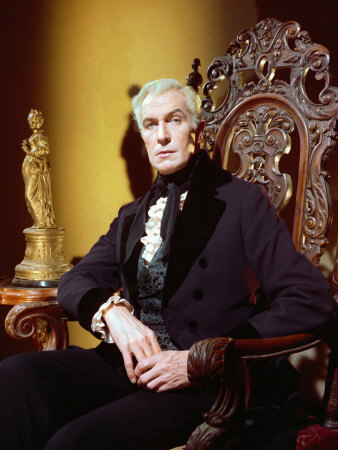
Vincent Price in Fall Of The House Of UsherPrice instead excelled at dark, brooding character portrayals and demonstrated a knack in campy roles. His long association with horror films began with The Invisible Man Returns (1940). However, many of his films throughout the 1940s were costumed period piece epics, such as The Song of Bernadette (1943), A Royal Scandal (1945) with Tallulah Bankhead, and The Three Musketeers (1948) with Lana Turner. All of these films were a return to the heavy-handed tradition of early Hollywood that wanted to churn out bigger-than-the-Bible styled epic films.

Price was often cast in supporting roles in these "A" films, such as Laura (1944) with the luscious Gene Tierney, but his starring roles, for which Price would set himself far above the rest, usually came in the form of "B" pictures. His 1953 film House of Wax would eventually set the stage for a series of horror film roles in the late 1950's through the late 1970's.

In the 1960's, Price had a number of low budget successes with Roger Corman and American International Pictures (AIP) including the Edgar Allan Poe adaptations House of Usher (1960), The Pit and the Pendulum (1961), Tales of Terror (1962), The Comedy of Terrors (1963), The Raven (1963), The Masque of the Red Death (1964), and The Tomb of Ligeia (1965). He also starred in The Last Man on Earth (1964) a film based on the Richard Matheson classic proto-zombie novel I Am Legend.

Vincent was a life long patron of the arts who has inspired countless artists, writers and directors to pursue their own improbable and unpopular dreams. He donated hundreds of his own personal collections of paintings to establish many SoCal galleries.

Vincent Price's health began to badly deteriorate during the production of Tim Burton's Edward Scissorhands (1990). The film was his final major film role before dying of lung cancer in L.A. in 1993 leaving behind three wives, son Vincent Barrett Price and daughter Mary Victoria Price.

Selected Filmography:
The Invisible Man Returns (1940)
The Fly (1958)
The House on Haunted Hill (1958)
The Tingler (1959)
The Return of The Fly (1959)
The Pit And The Pendulum (1961)
The Last Man on Earth (1964)
Dr. Goldfoot and the Bikini Machine (1965)
Dr. Goldfoot and the Girl Bombs (1966)
The Abominable Dr. Phibes (1971)
Dead Heat (1988)
Edward Scissorhands (1990)


References:
Amazon, Vincent Price: A Daughter's Biography Victoria Price, New York: St. Martin's Griffin 2000
I Like What I Know Vincent Price, New York: Doubleday 1958
Wikipedia, Vincent Price
Brian's Drive-In, Vincent Price
Vincent Price P.A., Elizabethtown, KY. Sept. 25, 1980


The Sleaze-A-Saurus Sez:Videos Online At:

Actors: Keith David

Keith David in They Live (1988)Keith David was born Keith David Williams on June 4th 1956 in Harlem to Lester and Delores Williams. His parents, who'd watched David perform in high school plays in public school, sent their son to Manhattan's School of Performing Arts to learn real stagecraft. Acting kept a young Keith David away from gangs, drugs and violence in the city and also allowed him to vent the tremendous frustration that comes with being smart, poor and black in America. This frustration became a strength in his roles as soldiers, vets, freedom fighters and underworld figures.
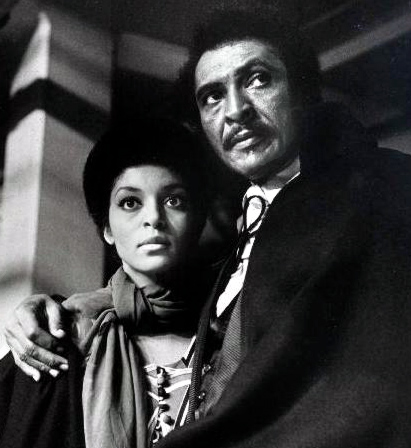
David honed his skills as an actor travelling the country with the venerable John Houseman's Acting Company where he appeared in A Midsummer Night's Dream and Samuel Beckett's Waiting For Godot. After putting his weight on it in an uncredited role in Rudy Ray "Dolomite" Moore's Avenging Disco Godfather (1979) David went on to star as Childs, opposite Kurt Russell in John Carpenter's The Thing (1982) which made him much sought after by Hollywood. His lengthy on-screen career had begun but undoubtably owed much thanks to William "Blacula" Marshall.

Keith David's balance of a tough, commanding presence and a high emotional IQ allowed the roles to roll in, so to speak, in the same way that William Marshall's talent for him did (however briefly) almost 20 years prior - with Marshall making room for talented black actors in more dynamic roles on national television in NBC's Star Trek in the early 1960's.

Keith, to date, has appeared in Oliver Stone's Platoon, John Carpenter's They Live, Road House(!), Men at Work, Marked for Death, Pitch Black and There's Something About Mary. In one of his most impressive roles, David played the character of Kirby, a one-legged Korean war veteran and neighborhood club owner, in the acclaimed 1995 Hughes Brothers film Dead Presidents. The film was not a traditional feel-good bankrobber or war film. It touched directly on racism, war, economic warfare and the nature of good and evil - all of this set in Viet Nam era New York.

Keith's voice-acting resume is just as long as his on screen performances including: the title role in Todd McFarlene's Spawn, Disney's Gargoyles and The Princess And The Frog (2009), Halo, Halo 2, Halo 3, Ken Davis' The War in which David won an Emmy for Outstanding Voice-Over Performance. Keith also acted as the voice of the Navy on tv and radio for 5 years.

Keith David currently has parts in 15 films that are due out in 2010.


References:
Wikipedia, Keith David
IMDB, Keith David

Actors: Douglas "Ox" Baker

Douglas 'Ox' BakerDouglas "Ox" Baker, born April 19th 1934, was a notorious figure in Professional Wrestling who was held indirectly responsible for the deaths of two of his opponents using his infamous "Heart Punch" attack. He or his likeness has appeared in movies and professional wrestling for nearly 40 years.

Baker was born and raised in Missouri, after dropping out of highschool, he trained as a boxer, wrestler and played as an Army football player. When he began wrestling in Kansas City his awesome size and appearence made him a crowd favorite. As the hulking villain Baker, who was unusually articulate offstage, would commandeer the announcer's microphone to bellow, "I LOVE to Hurt People".

Weighing in at 340 pounds and standing at six and half feet tall - it was easy to believe. During his career he faced an estimated 8,000 men in the ring including Hulk Hogan, The Iron Sheik and Jimmy "Superfly" Snuka.

However, his infamy would grow due to events beyond his control. In July of 1971, in a small town in Nebraska, Alberto Torres sustained an injury in the ring with Baker that led to a ruptured appendix. The resulting peronitis killed Torres three days later. The early wrestling community wasn't really that fazed by today's standards. But tragedy struck again in August of 1972 in Savannah Georgia when his opponent Ray Gunkel died in his dressing room immediately after his match with Baker. Gunkel died of an apparent heart attack.

These two incidents made Baker an exile from mainstream wrestling circuits like the newly formed WWF (and modern spin-off circuits like WCW) when wrestling really gained noteriety. These two deaths in the early 1970's happened long before steriod testing could have possibly cleared Baker of any wrong doing. Steroids enlarge internal organs, causes cell damage to organ walls and have been known to cause heart attacks with prolonged usage. Baker has been indirectly taking the blame for the deaths of these two men for 30 years in a time when professional wrestling rewards a wide crop of mundane and unremarkable athletes.

Baker remains an infamous figure. He is best remembered for his appearance as Kurt Russell's gladiatorial opponent in Escape from New York (1984) but also appeared in Jackie Chan's The Big Brawl (1981). Ox Baker's story is feaured in a new documentary called Card Subject to Change (2009), additionally he's authored a cookbook, a children's book, and a coloring book released by Fantagraphics. Baker still continues to make public appearences, in New England, at the age of 75.

References:
The Official: Ox Baker

Actors: William Marshall

William Marshall as the cursed vampire, Prince Mamuwalde

A life that leads a man from being a struggling young actor to finding fame as an infamous blaxploitation genre character to becoming a beloved children's television character is an unlikely proposition.

For William Marshall (1924-2003) this was his life. This meant after growing up in the dying steeltown of Gary, Indiana, getting an education in New York, gaining experience in traveling theater, building a strong reputation as a talented performer in minor television productions then Marshall had to face industry wide segregation in order to perform at the height of his powers to a largely racist audience, both black and white, that didn't know Shakespeare from shinola.

Regardless of the difficulties faced by black actors, William Marshall was featured in a dynamic supporting role on a nationally broadcast television show, as the robotics genius Doctor Daystrom, in the original Star Trek series. He appeared in the 1968 episode The Ultimate Computer. Although Marshall never appeared on the show again there are multiple references to him. A notable mention of Marshall/Daystrom is in the 1989 Star Trek TNG episode The Measure of A Man. The episode title comes directly from MLK Jr.'s first book and deals with the civil rights of a new form of life.

Up to 1968, black actors had two choices: either work in subordinate and stereotypical roles that often forced talented actors and actresses to portray buffoons, villains, cooks, maids, and dim witted farmers or - join segregated all-black casts on low budgeted "B" productions in independent roles.

In choosing B productions, many actors, like Marshall, would find themselves in what evolved into "blaxploitation" films. In the late sixties and seventies these films were made for drive-ins and inner city matinees. Black Frankenstein (1973), Cleopatra Jones (1973), TNT Jackson (1974), The Guy From Harlem (1977), Avenging Disco Godfather (1979) and William Marshall's Blacula series were at the high end of this genre. They launched the careers of Keith David, Pam Grier, Yaphet Kotto and many more into mainstream films.

Today, we watch movies like Shaft (1971), that feature black leads as heros and accept Richard Roundtree for the most part. We want to be like the bad mutha not kill the bad mutha or sell him out. These contemporary views on films like Shaft separate our mentality about race (which still has a ways to go) from the highly segregated attitude and volatile era before them.

The highly segregated world was the world that William Marshall lived in. He worked in the pre-Shaft and pre-Action Jackson (1987) world where Hollywood did not officially acknowledge an integrated America. There were theaters strictly for either white or black audiences. The movies they ran were filmed with a cultural apartheid at work.

Although Marshall was an extremely talented actor he was denied his due because of the prevailing attitudes in Hollywood and the US in general. He was called the world's greatest living Othello in his day as a stage performer by many New York theater critics but was only featured in a handful of films. Without men like Marshall there would be no Lawrence Fishbourne as Morpheus or Denzel Washington as Malcom X or a Spike Lee that would have found funding to make an "A" picture like Malcom X (1992) let alone Do The Right Thing (1989). The only good part of a Blacula-less universe is that there wouldn't be a Robert Townsend or any Wayans Brothers, either.

In the eighties and early nineties, William Marshall found TV work again becoming the beloved "King of Cartoons" on Paul Reuben's Pee Wee's Playhouse. Marshall also continued to travel the Horror Con circuit for years after Pee Wee's Playhouse was cancelled by CBS. He is remembered as being warm and intelligent by many of those he worked with over his 50 year career in stage, film, and television production. William Marshall died at age 79, in 2003.

In closing, no matter what your opinion is, TV and Film owes thanks to undeniably talented men like Marshall. Generations of actors and audiences are better informed, thematically and culturally, for his struggle and success.

References:
IMDB, William Marshall
Exploitation Films, Avenging Disco Godfather
Pop Culture, Blacula
Invisible Cinema, Blaxpolitation
Startrek.com, The Ultimate Computer

Actors: Béla Lugosi

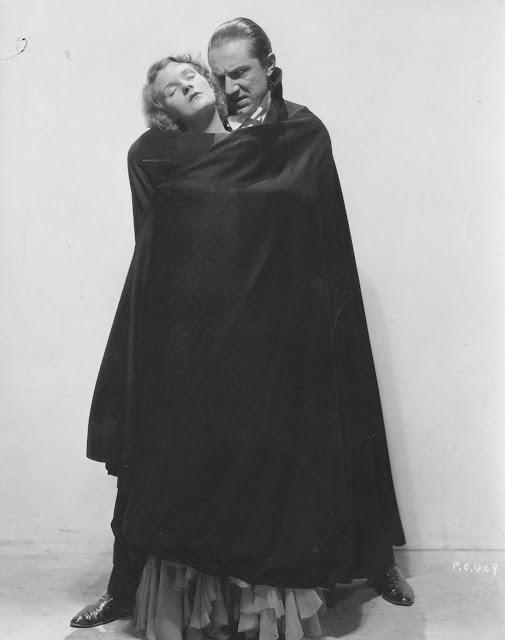
Béla Blaskó aka Bela Lugosi

Bela Lugosi (1882-1956) was born Béla Blaskó in the town of Lugos, Hungary 300 miles west of Transylvania. Lugosi and took his stage name from his home town as early as 1911. From then, Bela lived an entire life, studying acting at the Academy of Performing Arts in Budapest, thriving as a rising stage actor, most famously portraying Jesus Christ, and then fighting as a soldier in the trenches of WWI, far from Hollywood prior to his pivotal role of Count Dracula in 1931.

During WWI from 1914 to 1917, Béla volunteered for the Army even though actors were exempt from military service. He was commissioned as an Hungarian Infantry Lieutenant for the Central Powers and fought for the Dual Alliance of Germany, Austria-Hungary, Italy, the Ottoman Empire, and Bulgaria.

He was wounded three times fighting Allied forces including a permanent back injury that would plague him the rest of his life. For his service, Lt. Lugosi won the Alliance's Distinguished Service medal fighting Russia in 1916.[0]

He would later say, "If my accent betrayed my foreign birth, it also stamped me as an enemy, in the imagination of the (American) producers."[1]

As his part in WWI ended, Bela started making films in Europe in 1917 including several under the name "Arisztidt Olt". He left Hungary just prior to the post war Communist takeover of his country - fleeing first in 1919 to the doomed Weimar Republic in Germany and then illegally immigrated to the US, via New Orleans, in 1920.

The 38-year-old Lugosi lived and worked in New York City's expatriate community, which would swell as the Nazis and Facists took hold of Europe. When he first arrived he did menial tasks as a laborer to endure but in 1922, Lugosi began to pick up Broadway roles culminating with a 2-year run as Dracula in which he starred in 500 performances.[2]

Bela Lugosi
Bela Lugosi aka Arisztidt Olt as Jesus Christ in plays performed in pre-WWI Budapest, Hungary.

In 1927, Bela migrated to Hollywood, and in 1930 the part of Dracula was offered to him after the great Lon Chaney died of cancer. This film would make him a horror film star equal only to Karloff for his role in Frankenstein(1933) and Lon Chaney's Phantom and Quasimodo.

Bela also was featured in the forgotten classic White Zombie(1932) as the warlock Murder Legendre, a role second only to Dracula for his eerie performance. The film was reportedly made in Haiti for $50,000 in 11 days [3] and was hamstrung by hammy performances by some of more inexperienced of the cast.

Beginning in the 1940's Bela slipped into a fairly rough period for his remaining years as a result of being type-cast[4].He worked with Karloff on The Raven (1935) and many more films but apparently never developed more than a distant working relationships with any of his contemporaries. As the roles dried up, Bela sunk as low working in Abbot and Costello Meet Frankenstein (1948) as Count Dracula.

He died heart attack at age 73, addicted to morphine and penniless, while working on what has been called the worst movie ever made, Ed Wood's horrific Plan 9 From Outer Space(1959). He left 5 wives and a son named Bela Lugosi Jr. who has been a very successful entertainment lawyer in Hollywood for decades. There's a renewed interest in him since Tim Burton's Ed Wood biopic and it's well deserved for the definitive horror actor, Bela Lugosi.

Notes/Sources Cited:
0 = Monsters: A Celebration of the Classics from Universal Studios, edited by Jennifer Osborn, New York: Del Ray Books, imprint of Random House, Inc, 2006, p. 38. ISBN 0-345-48685-4. Referenced information is from an essay in the book written by his son Bela G. Lugosi. The book also contains essasy by the esteemed Mr. Forrest J. Ackerman, Roy Milano, and Jennifer Osborne.
1 = Quoted from one of many of Bela's infamous remarks. He even went as far to say: "In Hungary acting is a profession. In America it is a decision."
2 = Bela Lugosi's Official Site
3 = White Zombie(1932) DVD Info
4 = Bela Lugosi Bio by Sarah Perryman on Helium


References:
Wikipedia, Bela Lugosi
IMDB, Bela Lugosi
Bela Lugosi's Official Site
Monsters: A Celebration of the Classics from Universal Studios edited by Jennifer Osborn, New York: Del Ray Books, imprint of Random House, Inc, 2006


BACK TO ARTICLE

Actors: Boris Karloff

William Pratt aka Boris Karloff

Boris Karloff (1887 - 1969) was an actor famous for his portrayal of eerie monsters and macabre madmen. Karloff enjoyed nearly 200 roles during his long and prosperous life in motion pictures.

In England, Karloff was born William Pratt, the son of an "Anglo-Indian" (British and Indian) naval officer and English woman. He was staunchly refused entry into English society for being an estranged outcast by his parentage and, as a boy, Karloff was bow-legged, had a lisp and stuttered. In time, he developed his own manner of speaking to compensate for these impediments through rehearsal - evolving into the long snorous notes so distinctive in Karloff's speech.

After his mother's untimely death, he was raised by her relatives and excelled in private school - eventually attending King's College or London University (according to imdb.com). In 1909 he migrated to Canada, at the age of 22, to elope with his first wife stage actress Olive Wilton. Karloff would not to reunite with his English family until two years after his breakthrough role in Frankenstein (1931) in 1933 - this time with accolades and photo opportunities with his half-brothers.

The popularity of Karloff and Universal monster flicks he appeared in kept major studios going during the Depression and into WWII with his uncanny portrayal of Imohotep in the Mummy (1932) and subsequent sequels. He worked diligently in the
Universal horror cycle and in lesser B pictures with Bela Lugosi on The Raven (1935), The Invisible Ray (1936), and Black Friday (1940).

In the 1960's, Karloff collaborated with fellow actors Peter Lorre and Vincent Price with the king of B movies Roger Corman. Together they shot The Terror (1963) featuring Jack Nicholson's first major film role, The Raven (1963) and The Comedy of Terrors (1963) which also featured Basil Rathbone. Karloff also appeared in cult classics like Jack Hill's Snake People (1971) that was made in Mexico when Karloff was confined to a wheelchair and was posthumously released after Karloff had quietly ventured to the other shore. Prior to his passing, he worked in animation voicing several characters in Ranklin/Bass's Mad Monster Party? (1967) and narrating the Dr. Seuss classic How The Grinch Stole Christmas (1966).

It should be remembered that Karloff, in recalling his own childhood, was an extremely generous donor to children's charities. Begining in 1940, he played Santa Claus every year for children at Baltimore's Children's Hospital in Maryland, sometimes flying in the winter from LA, NYC, or the UK. He did this even in poor health or confined to a wheelchair until the mid 1960's.

Gallery I. | Gallery II. | Gallery III.


Selected Filmography:
Mad Monster Party? (1967)
How the Grinch Stole Christmas! (1966)
The Comedy of Terrors (1963)
Frankenstein 1970 (1958)
Dick Tracy Meets Gruesome (1947)
House of Frankenstein (1944)
Son of Frankenstein (1939)
Bride of Frankenstein (1935)
The Raven (1935)
The Mummy (1932)
Scarface (1932)
Frankenstein (1931)


References:
Wikipedia, Boris Karloff
IMDB, Boris Karloff
Biography Channel, Boris Karloff
Drive-In Theater, Boris Karloff

Actors: Brad Dourif

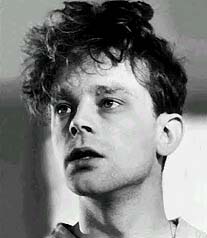
Billy BabbitKnown for his edgy, affected performances Brad Dourif, born in West Virginia in 1950, has starred in B-movies for 30 plus years. Dourif has been critically recognized as one of the finest and most versatile working actors today. He is part Anthony Perkins and part Boris Karloff - able to play the carefully controlled type and erupt with menace.

His roles have ranged from frontier sawbones Doc Cochran in the remarkable cable series Deadwood to his widely known role as Wormtoungue in The Two Towers (2002).

Dourif toiled away in obscurity for nearly a decade after winning a Golden Globe in 1975 for his shattering performance as the vulnerable Billy Babbit in Ken Kesey's One Flew Over the Cuckoo's Nest. His next roles were in John Huston's Wise Blood (1979) and, in the tradition of Basil Rathbone and Boris Karloff, was type-casted as a villain in B-movie horror flicks. Most notable of these b-movie roles was in the Child's Play movie series as the deranged killer Charles Lee Ray/Chuckie who's homicidal spirit was hidden within a "Good Guy" doll's body.

The intensity of his supporting role in David Lynch's Dune (1984) as the diabolical Piter Devries would resurrect his career. As DeVries, a "twisted Mentat" - an organic machine w/out morality, Dourif portrayed a being more evil than the despotic Baron Harkonen whom he served. Devries was both a brilliant researcher and a deadly assassin. In the end, he died unwittingly saving his Baron from what would have been a just vengeance.

Since that point, he's found steady roles in television and movie series such as Star Trek Voyager, The Equalizer, Babylon 5, The X-Files, Critters 4 (1991), Alien: Resurrection (1997), and has even appeared in the remake of H.G. Lewis's Wizard of Gore (2007).

Selected Filmography:
One Flew Over the Cuckoo's Nest (1975)
Billy Babbit, a emotionally disturbed young man who commits suicide.
Dune (1984)
Piter DeVries, a deadly, twisted assassin.
Child's Play (1988)
Voice of Chuckie/Charles Lee Ray, a serial killer who uses black magic.
Alien: Resurrection (1997)
As the unscrupulous Dr. Jonathan Gediman he hatched alien larvae in space travellers.
Two Towers (2002)
Grima Wormtoungue, an evil adviser in league with Sauron and Sarumon, who plotted to marry an unwilling Éowyn - the king's niece.
Deadwood (2004-06)
Doc Cochran, country doctor known for integrity and strength of character.
Halloween II (2009)
Took up the role Sheriff Lee Brackett who first appeared in the original Hallowen (1978).


References:
Wikipedia, Brad Dourif
Brad Dourif.org, Fan Site
Joblo, Dissecting Brad Dourif
Instantcast.com, Brad Dourif Bio
Essays, Ken Kesey's One Flew Over the Cuckoo's Nest